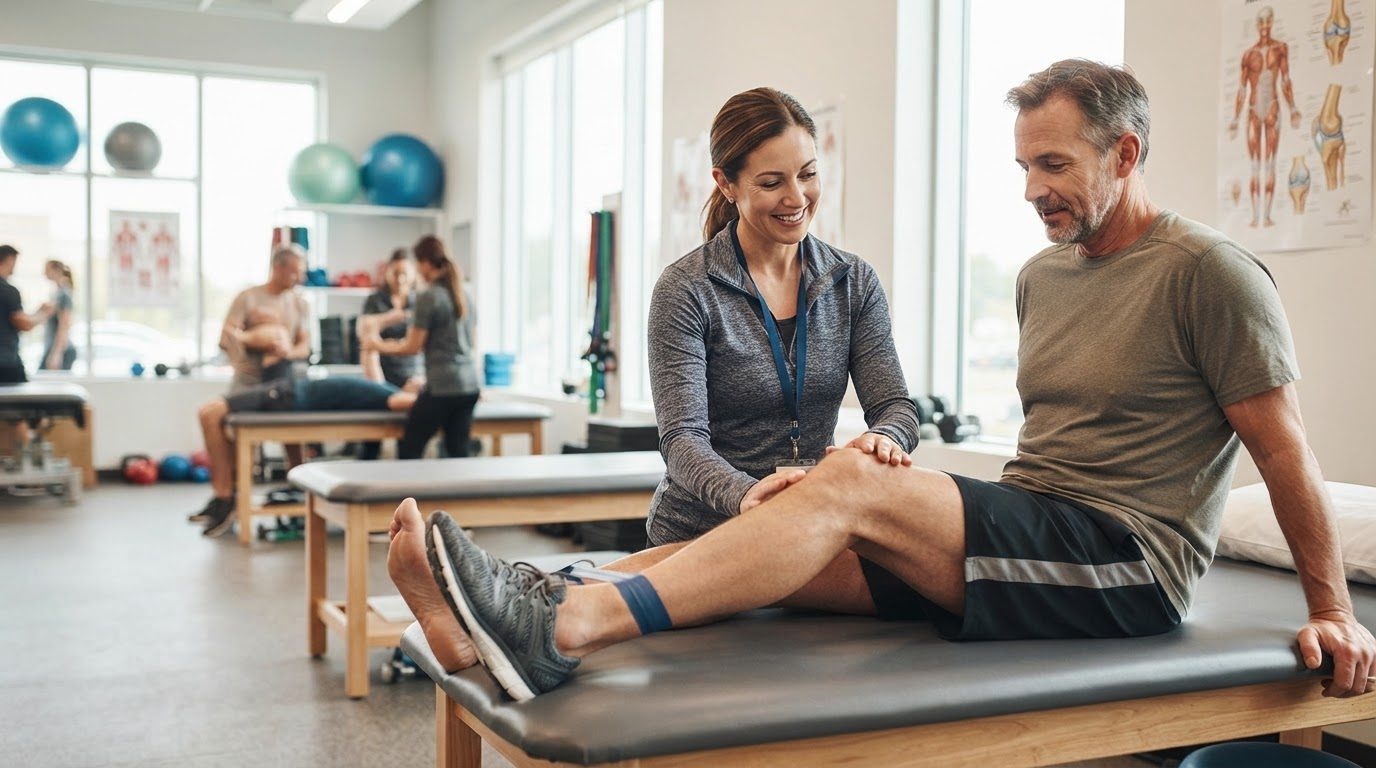
Knee pain can be a persistent and frustrating issue, often impacting daily activities and limiting participation in hobbies or exercise. While many people experience temporary relief from over-the-counter medications or basic rest, the underlying causes of chronic knee discomfort are frequently overlooked, leading to recurring problems. This cycle of pain and temporary fixes can leave individuals feeling disheartened and unable to regain their desired level of activity.
Understanding the multifaceted nature of knee pain is crucial for effective management. Factors such as poor hip strength, restricted ankle mobility, altered gait patterns, and even old injuries can contribute to how the knee joint bears weight and functions. For those seeking comprehensive solutions for Knee pain treatment, a detailed assessment that considers the entire kinetic chain can uncover these contributing elements.
Many individuals in Lombard, IL, and surrounding areas like Downers Grove, Glen Ellyn, Wheaton, Oakbrook, and Elmhurst, have found relief by exploring treatment options that go beyond superficial symptom management. A personalized approach that examines how your whole body moves, testing strength, stability, and joint motion, can lead to a tailored plan to restore balance and reduce irritation naturally. This comprehensive strategy is offered by True Health Chiropractic and Acupuncture, which aims to help people move freely, feel strong, and trust their bodies again.
The Interconnectedness of Knee Health
The knee joint, while robust, is highly susceptible to issues originating from other parts of the body. It acts as a crucial link in the kinetic chain, meaning problems in the feet, ankles, hips, or even the lower back can manifest as knee pain. Ignoring these upstream or downstream contributors often leads to incomplete recovery and a higher likelihood of recurrence.
Consider these common scenarios:
- Foot and Ankle Restrictions: Limited ankle mobility can force the knee to compensate during walking, running, or squatting, leading to abnormal stress and eventual pain. Similarly, issues like flat feet or high arches can alter the alignment of the leg, putting undue pressure on the knee.
- Hip Weakness: Weak hip muscles, particularly the glutes, can cause the thigh bone to rotate inward, misaligning the kneecap and increasing strain on surrounding tissues. This is a frequent culprit in conditions like runner’s knee (patellofemoral pain syndrome).
- Gait Abnormalities: Subtle changes in how a person walks or runs, often developed as a compensatory mechanism for pain or injury elsewhere, can place repetitive, unhealthy loads on the knee joint.
- Old Injuries: A past ankle sprain or hip strain, even if seemingly healed, can leave residual imbalances or scar tissue that subtly alters movement patterns, eventually affecting the knee.
Addressing these interconnected factors is key to long-term relief. A treatment approach that focuses solely on the knee itself might provide temporary comfort but fails to resolve the underlying mechanical issues.
Moving Beyond Symptom Management: A Holistic Perspective
Effective knee pain treatment moves beyond simply dulling the symptoms. It involves a thorough evaluation to identify the root causes of discomfort and then implementing a plan to correct those imbalances. This often means looking at the entire body’s biomechanics, rather than isolating the knee.
A comprehensive approach typically includes:
Detailed Assessment and Diagnosis
The first step involves understanding the individual’s unique story, including when the pain started, what activities aggravate it, and what limitations it imposes. This personal history is combined with a physical examination that assesses:
- Range of Motion: How freely and fully the knee, hip, and ankle joints move.
- Strength Testing: Evaluating the strength of muscles surrounding the knee, hips, and core.
- Stability Analysis: Checking for any instability in the joint or surrounding structures.
- Gait Analysis: Observing walking or running patterns to identify abnormal mechanics.
- Palpation: Gently feeling around the knee and surrounding areas to locate tender spots, swelling, or structural anomalies.
This thorough assessment helps pinpoint specific issues like meniscus irritation, ligament sprains, arthritis, tendonitis, or IT band problems. It also helps in understanding why a knee might click, shift, swell after activity, or feel weak and unstable.
Personalized Treatment Plans
Based on the assessment findings, a tailored treatment plan is developed. This plan is designed to restore balance, reduce irritation, and improve overall function without necessarily relying on medications or immediate surgery. Common components of such a plan may include:
- Manual Therapies: Techniques aimed at improving joint mobility, reducing muscle tension, and promoting tissue healing. This can include adjustments, mobilizations, and soft tissue work.
- Therapeutic Exercises: Specific exercises designed to strengthen weak muscles (especially hips and core), improve flexibility, and correct movement patterns. These are crucial for long-term stability and preventing future flare-ups.
- Acupuncture: This traditional Chinese medicine technique involves inserting thin needles into specific points on the body. It is often used to reduce pain, decrease inflammation, and promote healing by stimulating the body’s natural pain-relief mechanisms.
- Lifestyle Modifications: Guidance on activity modification, ergonomic adjustments, and strategies to reduce stress on the knee during daily tasks or sports.
- Nutritional Support: Recommendations for dietary changes or supplements that can support joint health and reduce inflammation.
Even post-surgical stiffness can often improve with this type of comprehensive treatment, as it focuses on restoring normal movement and function. The goal is to empower individuals to return to activities they love, whether it’s hiking, training, golfing, playing with children, or simply walking without discomfort.
When to Seek Professional Help for Knee Pain
While some minor knee aches may resolve with rest and home care, certain signs indicate that professional evaluation is warranted. It’s advisable to consult a healthcare provider if you experience:
- Severe pain that prevents you from bearing weight on your knee.
- Significant swelling or redness around the knee.
- Inability to fully extend or bend your knee.
- A popping or clicking sound at the time of injury, especially if followed by pain or instability.
- Deformity of the leg or knee.
- Fever in addition to knee pain, which could indicate infection.
- Pain that persists for more than a few days despite home remedies.
- Pain that interferes with your sleep or daily activities.
A professional assessment can help differentiate between minor issues and more serious conditions, ensuring appropriate and timely intervention. Many people try rest, injections, or temporary fixes that never solve the root problem. Taking control of your knee pain means seeking a thorough evaluation and a strategic plan to address its underlying causes.